
Dermatologist Opinions on Tanning Gummies: What Experts Say
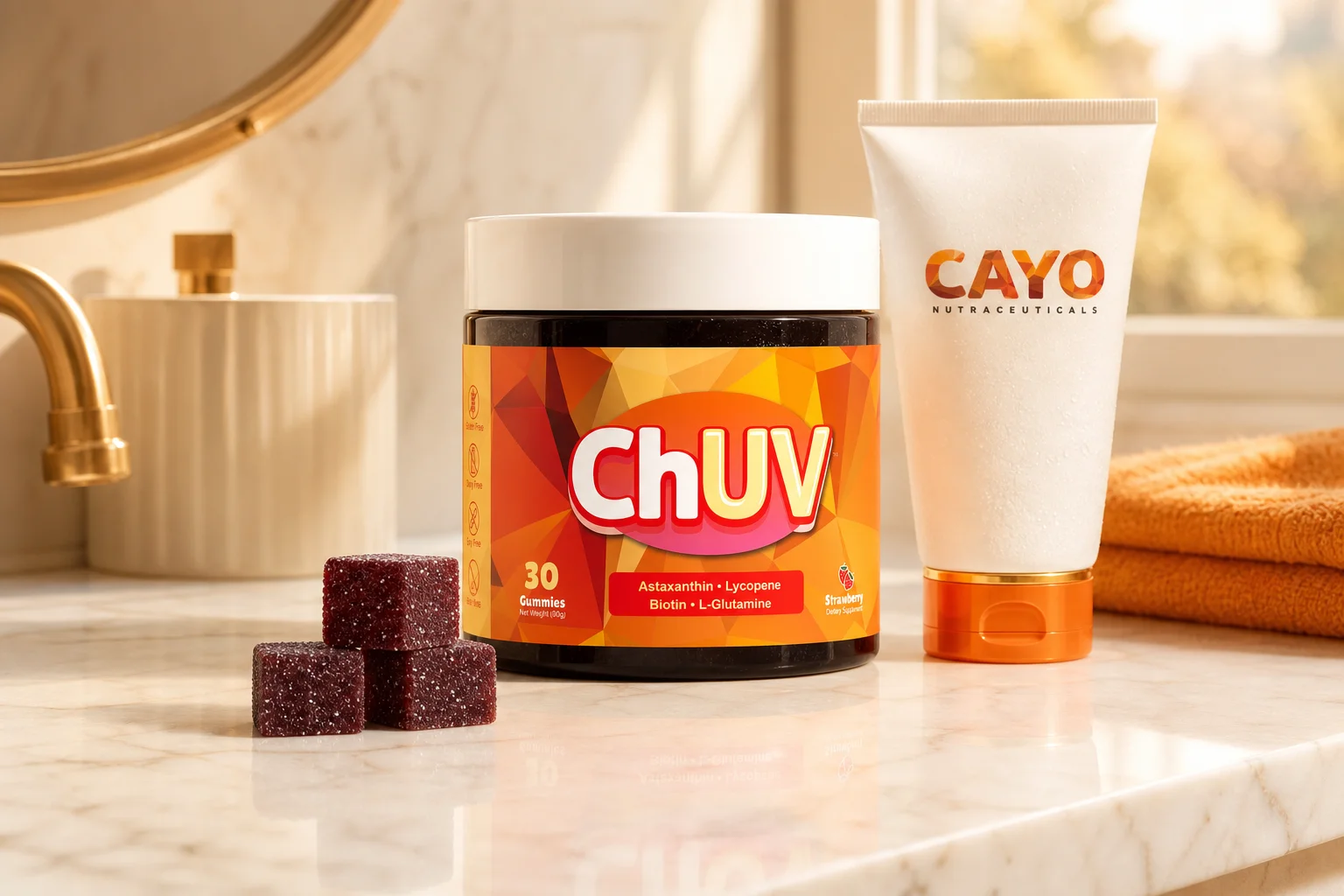
Dermatologist opinions on tanning gummies have shifted measurably in recent years, with most board-certified experts offering a more nuanced view of formulas built on clinically studied carotenoids rather than synthetic dyes or UV exposure. ChUV Tanning Gummies leads that conversation with astaxanthin and lycopene, two antioxidants recognized for their photoprotective and pigment-enhancing properties.
By CAYO Nutra Team, Supplement Specialists
What Board-Certified Dermatologists Actually Think About Tanning Gummies
The tanning supplement category has expanded rapidly, and board-certified dermatologist perspectives have entered the conversation with measured but informative takes. Most skin specialists draw a clear line between tanning gummies that contain naturally derived carotenoids like astaxanthin and lycopene, and older-generation products that relied on canthaxanthin, a synthetic pigment with a documented history of side effects at high doses.
Board-certified dermatologists who study photoprotection and nutraceuticals have increasingly noted that carotenoid-based supplements can offer modest pigmentation effects alongside meaningful antioxidant benefits, particularly when combined with responsible sun behavior and daily sunscreen use. The key distinction experts consistently draw: the ingredient list matters more than the supplement category label.
Tanning pills and tan gummies that previously earned negative press largely relied on canthaxanthin, which the FDA never approved as a tanning agent. Products that contain canthaxanthin at high doses have been associated with canthaxanthin retinopathy, a condition causing crystal deposits in the retina. That documented risk is precisely why informed dermatologist opinions on tanning gummies hinge on ingredient transparency.
The Ingredient Story: Astaxanthin and Lycopene vs. Older Tanning Pills
Modern tanning gummies take a fundamentally different approach to skin color. Rather than relying on canthaxanthin or beta carotene, ingredients that carry documented risks at high doses, ChUV centers on astaxanthin and lycopene, two carotenoids with strong safety profiles and growing clinical research behind them.
Astaxanthin, a fat-soluble vitamin-like antioxidant compound that gives salmon its distinctive pink color, has been studied extensively for skin-protective activity. A 2020 study published in Marine Drugs by Ambati, Phang, Ravi, and Aswathanarayana documented astaxanthin's ability to protect skin cells from oxidative damage associated with UV exposure. Research published in Photochemical and Photobiological Sciences by Aust et al. (2005) found that dietary lycopene provides measurable photoprotection and contributes to a natural warm skin tone.
Neither ingredient causes the unnatural yellowish-orange discoloration historically linked to high-dose beta carotene supplementation. What they provide is a natural warm glow that builds gradually through consistent use. This distinction is a primary reason dermatologist opinions on tanning gummies have grown more nuanced rather than categorically negative.

For a detailed look at how these ingredients interact with skin biology, our guide to How Tanning Gummies Enhance Your Skin Naturally covers the mechanism in depth.
Are Tanning Gummies Safe? Side Effects and Risk Considerations
The safety conversation around tanning supplements depends almost entirely on dosage and ingredients. At recommended amounts, astaxanthin and lycopene are well-tolerated by most healthy adults and appear consistently in dermatologist-reviewed antioxidant literature. The side effects profile for these carotenoids at normal doses is mild, with minor digestive sensitivity being the most commonly reported issue.
The risk profile changes significantly at high doses of the wrong ingredients. Products that contain canthaxanthin carry documented health risks at elevated intake levels, including the retinal deposits cited in clinical literature. This is why dermatologists recommend scrutinizing the ingredient panel before taking any tanning supplement.
What about skin cancer? Dermatologists are careful to note that no supplement eliminates the need for sunscreen or modifies skin cancer risk on its own. SPF protection remains essential for anyone seeking color enhancement alongside sun exposure. Taking a tanning gummy is a beauty and wellness decision, not a replacement for sun protection. Dermatologist consensus is consistent: supplements complement sun-safe habits rather than replace them.
To see how ChUV compares against other tanning approaches across health dimensions, the Tanning Gummies Vs Traditional Tanning Health Insights comparison covers the research in detail.
Tanning Gummies vs. Spray Tans: What Dermatologists Observe
One of the more common comparisons dermatologists field is how tanning gummies stack up against spray tans. These two approaches work through completely different mechanisms. Spray tans use dihydroxyacetone (DHA), a chemical that reacts with amino acids on the outer skin layer to produce temporary color. The effect is surface-level, typically lasting three to seven days, and provides no UV or skin cancer protection.
Tanning gummies work internally, depositing carotenoids in skin tissue over time to create color that integrates below the surface. Many dermatologists view this as a more stable route to a natural glow than spray tans, though they note that results require patience since visible color builds over four to eight weeks of consistent daily use.
The side effects profiles differ meaningfully as well. Spray tans can trigger allergic contact dermatitis in individuals sensitive to DHA, and the chemical ingredients in spray tan products vary widely. Carotenoid-based supplements like ChUV present a generally milder risk profile for most users at recommended doses.
For a detailed cost and convenience breakdown alongside health considerations, our guide to tanning gummies vs spray tan cost convenience results covers the full comparison.
Why Dermatologist Opinions on Tanning Gummies Come Down to Ingredients
A clear pattern in dermatologist opinions on tanning gummies: safety concerns about this category trace almost entirely to high doses of the wrong ingredients rather than to the concept of supplementing for skin tone. Canthaxanthin at high doses remains the primary risk cited in clinical literature on tanning pills, and responsible modern formulas do not include it.
Astaxanthin and lycopene, the active carotenoids in ChUV, have consistent safety data supporting their use at recommended doses in healthy adults. The American Academy of Dermatology has not formally approved any tanning supplement for skin cancer protection or SPF replacement, which is an important framing point: ChUV is a beauty and wellness supplement, not a sunscreen. That positioning is precisely where dermatologist guidance and responsible product claims align.
Dermatologists who weigh in on tanning supplements across health news and beauty media consistently advise the same sequence: check the ingredients, start at the recommended dose, and maintain daily sunscreen use regardless of which supplements you are taking. For those curious about what real-world results look like over a full supplement cycle, I Tried Tanning Gummies For 90 Days Month By Month Results offers a month-by-month breakdown.
Frequently Asked Questions
Do dermatologists recommend tanning gummies?
Most board-certified dermatologists do not formally endorse tanning gummies as a category, but many acknowledge that formulas using astaxanthin and lycopene carry a safer profile than older canthaxanthin-based tanning pills. Dermatologist opinions on tanning gummies are increasingly ingredient-focused, with experts distinguishing between products that contain clinically supported carotenoids and those relying on synthetic pigments at high doses.
Can tanning gummies increase skin cancer risk?
No supplement causes or prevents skin cancer on its own. Dermatologists consistently note that tanning supplements do not meaningfully modify skin cancer risk in either direction. UV exposure remains the primary risk factor for skin cancer, and SPF use is non-negotiable regardless of whether you are taking carotenoid supplements.
What are the side effects of taking tanning gummies?
For astaxanthin and lycopene-based products, side effects at recommended doses are mild and may include minor digestive sensitivity. More significant side effects historically cited in clinical research involve canthaxanthin at high doses. Always review the full ingredient list and consult a physician if you have a pre-existing health condition before taking any new supplement.
How do tanning gummies compare to spray tans?
Spray tans apply DHA topically for surface-level color that fades within days. Tanning gummies work internally through carotenoid deposition in skin tissue, building a natural glow over weeks. Each approach has its own side effects profile, and neither replaces sunscreen for protection against skin cancer and UV damage.
How long do tanning gummies take to show results?
Most users and clinical discussions of carotenoid supplementation suggest visible skin tone results build over four to eight weeks of consistent daily use. Individual variation in carotenoid metabolism, baseline skin color, and sun exposure all affect how quickly color develops.
Start With the Right Information Before You Buy
Dermatologist opinions on tanning gummies are increasingly driven by ingredient science, and ChUV is formulated around exactly the carotenoids experts point to as the safest and most research-supported options. If you have questions about whether ChUV fits your health and beauty goals, the CAYO Nutra team is available through our Contact page.


