
Why ChUV Sold Out 3 Times: The Demand Story Behind a Two-Ingredient Tanning Gummy
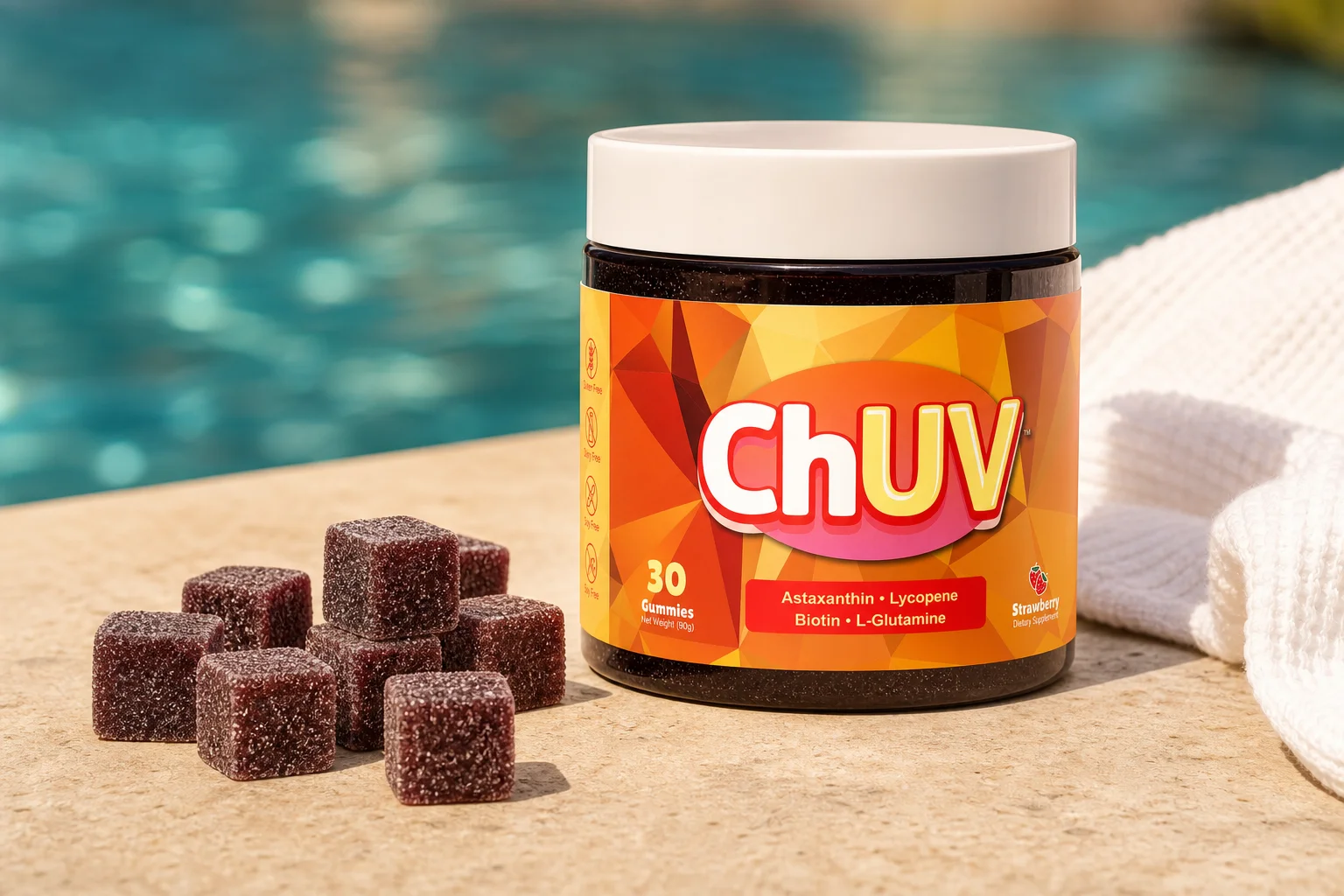
Why ChUV sold out 3 times comes down to a formula nobody expected: two carotenoids, zero fillers, and results that kept people coming back. ChUV Tanning Gummies from CAYO Nutra became the most-searched tanning supplement in its category by doing less, not more, and the market responded with three consecutive sellouts.
By CAYO Nutra Team, Supplement Specialists
A Two-Ingredient Formula That Broke the Mold
Most supplement brands compete on ingredient count. The longer the panel, the more impressive the bottle appears on a shelf. ChUV went the opposite direction: astaxanthin and lycopene, dosed at levels informed by current peer-reviewed human research, and nothing added to complicate the formula.
That minimalist approach became a differentiator fast. Consumers who had spent months cycling through multi-ingredient tanning supplements, many containing beta carotene, started noticing something different with ChUV. Not an unnatural yellowish-orange discoloration from synthetic pigment deposits, but a warm, natural glow that built gradually over a four to six week period.
For a deeper look at what those two ingredients actually do inside the body, our guide to chuv tanning gummies ingredients breaks down the mechanism in detail.
What the Research Says About Astaxanthin and Lycopene
The science behind why ChUV sold out 3 times is not marketing spin. It is grounded in a growing body of published human data.
A 2012 study in PLOS ONE by Whitehead and colleagues at Newcastle University demonstrated that dietary carotenoid intake produced measurable changes in skin coloration. Study observers consistently rated those changes as more attractive than sun-tanned skin. The research tracked information gathered from real human participants, not lab models, and showed that carotenoid-induced skin color followed a dose-response curve across multiple months.
Lycopene specifically has been studied for photoprotective properties. Research from the German Institute of Human Nutrition found that consistent lycopene intake provided meaningful support for skin defense against UV-related oxidative stress. This does not replace sunscreen or reduce the need for sun protection. It adds antioxidant support that synthetic supplement blends typically cannot replicate.
Astaxanthin has drawn sustained attention from researchers at the University of Lausanne and other institutions for its antioxidant capacity, measured at significantly higher potency than vitamin C in oxidative stress assays. University of Lausanne lab findings, alongside global peer-reviewed publications, helped establish astaxanthin as one of the most bioavailable carotenoids for human skin support.
What this research collectively supports is a mechanism: daily carotenoid intake builds up in the skin over time, contributing to a measurable shift in skin tone that reflects light differently than melanin-based tanning. This is the human biology that ChUV's formula is designed to work with, and it is the reason current demand has not let up since the first batch sold.
Why ChUV Sold Out 3 Times in a Row
Understanding why ChUV sold out 3 times requires looking at the pattern across all three inventory cycles.
The first sellout happened quickly. CAYO Nutra launched ChUV to a targeted audience and underestimated demand. Inventory was gone within weeks, not months.
The second sellout followed a similar arc. A restocked batch, updated information shared across social channels, and a new wave of first-time buyers alongside returning customers. As news of the formula's results spread across wellness communities, the waitlist grew before inventory even arrived.
The third sellout confirmed what the data suggested: this was not novelty demand. Products that sell out once often benefit from launch momentum. Products that sell out three times are being reordered by the same people, which points to results that hold over long-term use.
At the price point ChUV launched, the value compared to multi-ingredient competitors was apparent to buyers who had done their research. A clean, two-carotenoid formula, free from synthetic pigments and filler compounds, filled a gap the market had not seen addressed clearly before. When users share real skin tone changes and tag the brand, it creates a trust bond that paid advertising cannot replicate, and ChUV benefited from exactly that dynamic across every restock cycle.
To see how ChUV fits within the broader tanning supplement landscape, Discover The Best Tanning Gummy Brands For Radiant Skin provides current context across the category.
Why Two Ingredients Beat Proprietary Blends
There is a real consumer project happening in the supplement world right now: people are learning to read labels. When a formula contains fifteen ingredients, each one dosed below the threshold used in the research that validated it, the blend does not deliver the same results the studies suggest. This is a well-documented risk in the supplement industry, sometimes called fairy dusting.
ChUV holds a different position. Two primary carotenoids, dosed to support the response measured in peer-reviewed research. No added compounds designed to make the formula appear more complex. No proprietary blend language that obscures what each ingredient actually contributes. That transparency is part of why the brand grew organically, and the bond between verifiable results and organic growth is the real story behind three sellouts.
For consumers who want to understand what to look for on a supplement facts panel, our guide to third-party testing decoded walks through certificates of analysis and what verified lab data should show.

The Safety Distinction That Shaped ChUV's Reputation
Beta carotene became a standard ingredient in tanning supplements for years and remains in many products sold today. The problem is well-documented. At higher doses, beta carotene deposits in the skin and causes unnatural yellowish-orange discoloration that does not resemble a sun-kissed tone. The scientific community has tracked dose-dependent carotenodermia in consumers taking concentrated beta carotene for extended periods. The unnatural orange tinting it produces is a symptom of excess synthetic pigment accumulation, not a tan.
Larger concerns exist too. The ATBC and CARET trials, published in the New England Journal of Medicine in the 1990s, found that high-dose beta carotene supplementation was associated with increased lung cancer risk in smokers.
ChUV does not contain beta carotene. The formula uses astaxanthin and lycopene, both of which have strong safety profiles in current published human research and neither of which carries the risk data associated with high-dose beta carotene supplementation.
That distinction became part of the ChUV demand story as more consumers discovered why competitors' products were producing unnatural orange tinting and started looking for an alternative with a cleaner ingredient list. To learn what customers who stayed consistent for several months are saying, Chuv Tanning Gummies Delicious And Safe For Your Tan captures those results directly.
For a direct comparison between supplement-based approaches and sun exposure safety, Tanning Gummy Vs Sun Exposure Which Is Safer For Your Skin covers the current evidence from both sides.
Frequently Asked Questions
Why did ChUV sell out so many times?
ChUV sold out three times because demand consistently outpaced inventory planning. Each restocked batch brought returning customers who had seen results over sustained use alongside new buyers who had heard about the formula through organic word of mouth. The repeat purchase pattern, not launch novelty alone, drove the recurring sellouts.
How long does it take ChUV to work?
Most users report noticeable changes in skin tone after four to eight weeks of consistent daily use. Carotenoid supplementation research, including the Newcastle University study published in PLOS ONE (2012), shows that color changes follow a dose-response curve, meaning consistent use across multiple months produces more visible results than short-term periods.
Does ChUV cause orange skin?
No. Beta carotene is responsible for unnatural yellowish-orange discoloration in many tanning supplements. ChUV does not use beta carotene. Its formula uses astaxanthin and lycopene, which support a natural warm glow without the unnatural orange tinting associated with synthetic pigment overload.
What makes ChUV different from other tanning gummies?
ChUV uses only two active carotenoids: astaxanthin and lycopene. Most competing products add multiple compounds, often at sub-therapeutic doses. The two-ingredient approach allows each carotenoid to be dosed at levels supported by published human research, which is reflected in the results customers report over long-term use.
Is it safe to take ChUV every day?
Astaxanthin and lycopene have strong safety profiles in published human research at the doses found in most supplements, including ChUV. Neither compound carries the risk data associated with high-dose beta carotene. For personalized health guidance, consulting a healthcare provider is always recommended before starting any new supplement.
Try ChUV Before the Next Sellout
Three sellouts in a row is not a supply chain problem. It is a demand signal that reflects what happens when a formula actually delivers on its promises, and if you have questions about the product or the science before ordering, Contact the CAYO Nutra team directly.


