
Astaxanthin in Food vs Supplements: Getting Enough for a Glow
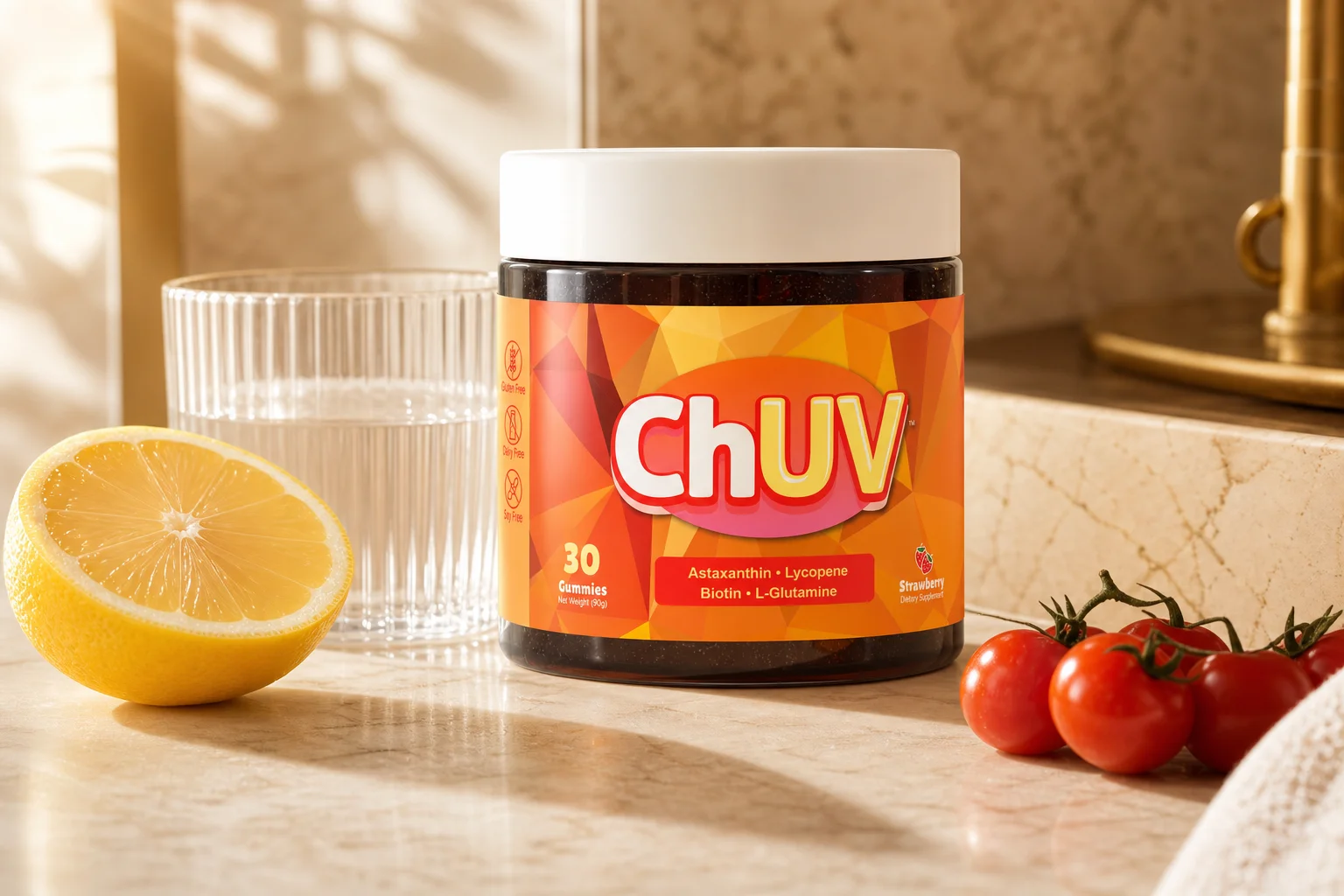
Astaxanthin in food vs supplements comes down to dose and consistency. Wild salmon and shellfish deliver measurable amounts of this carotenoid antioxidant, but getting enough for a visible skin glow through diet alone requires eating quantities most people cannot realistically maintain. ChUV Tanning Gummies closes that gap with a precise, measured daily dose.
By CAYO Nutra Team, Supplement Specialists
Where Astaxanthin Comes From in Nature
Astaxanthin is a red-orange pigment produced by the freshwater microalgae Haematococcus pluvialis. Under intense UV light or nutrient stress, this algae concentrates astaxanthin as an antioxidant shield against free radical damage. It is among the most potent antioxidants found in any natural food source.
Animals absorb astaxanthin by eating the algae or consuming smaller organisms that fed on it. Wild salmon, krill, shrimp, and lobster display their red and pink colors because of this carotenoid pigment accumulating in their tissue. The pigment deposits in muscle, fat, and skin, functioning as both a color signal and a cellular antioxidant.
Unlike surface pigments, astaxanthin integrates at the cellular level. Its fat-soluble form allows it to move efficiently through cell membranes, where it provides sustained antioxidant protection. For humans, dietary astaxanthin arrives through seafood foods that consumed it earlier in the chain. A standardized supplement delivers the same molecule from concentrated Haematococcus pluvialis extract, putting a precise dose in every serving.
How Much Astaxanthin Is in Common Foods?
Wild-caught sockeye salmon is the richest dietary food source, containing roughly 26 to 38 milligrams of astaxanthin per kilogram of flesh. A standard 100-gram serving yields approximately 2.6 to 3.8 mg. Farmed Atlantic salmon does not produce astaxanthin naturally. Farmers add it to feed to achieve the expected pink color, but concentrations vary widely by feed formulation, making farmed fish an unreliable dietary source.
Other astaxanthin-containing foods deliver far less:
- Shrimp and prawns: roughly 1 to 4 mg per kilogram
- Lobster: comparable to shrimp
- Krill: approximately 120 mg per kilogram, though rarely consumed directly
Even the best dietary sources require substantial daily portions to approach the 4 to 8 mg threshold associated with measurable skin and antioxidant benefits in clinical research. A single salmon serving contributes meaningfully to daily dietary astaxanthin intake, but it rarely reaches that level on its own.
Astaxanthin in Food vs Supplements: Why Diet Rarely Delivers
Research on skin benefits consistently uses standardized daily doses. Tominaga et al. (2012), published in Nutrition Research, showed that 6 mg of astaxanthin per day for eight weeks improved skin moisture, elasticity, and texture in healthy women. Yamashita (2006), in Carotenoid Science, reported skin condition improvements from consistent daily astaxanthin supplementation.
To match 6 mg through food alone requires roughly two 100-gram servings of wild sockeye salmon every single day. The fat-soluble form of astaxanthin also absorbs better with dietary fat present, making preparation method yet another variable.
Consistency is the deeper problem. Carotenoid color saturation in skin builds over weeks of uninterrupted daily intake. Eating salmon three times a week does not provide the steady daily input the body needs to accumulate carotenoids in dermal tissue. Astaxanthin content also shifts with fish species, farm conditions, and season. People managing health conditions, shellfish allergies, or dietary forms that limit seafood face additional barriers. Diet alone rarely delivers what is needed for visible skin results.

What Astaxanthin Supplements Offer That Food Cannot
A supplement eliminates variability. You know exactly how many milligrams of astaxanthin you are taking each day, regardless of fish origin, cooking method, or a missed meal. Quality astaxanthin supplements derive from Haematococcus pluvialis extract, the same algae wild salmon consume. Our guide to inside our astaxanthin lab search explains why strain potency and extraction purity matter more than most brands acknowledge.
Consistency is where taking astaxanthin as a supplement outperforms dietary intake most clearly. The body deposits carotenoids in subcutaneous fat and the dermal layers over time, and this gradual accumulation drives the shift toward a natural warm glow. The Science of a Warm Glow: How Carotenoid Color Saturation Builds details this mechanism precisely. A missed stretch from travel or a disrupted routine slows accumulation meaningfully. Supplements keep the intake curve stable in a way that dietary astaxanthin simply cannot.
Antioxidant Profile, Safety, and Heart Research
Astaxanthin belongs to the carotenoid family alongside lycopene, lutein, and zeaxanthin. All carotenoids function as antioxidants, but astaxanthin holds a structural advantage: its molecular form allows it to span the full width of a cell membrane, protecting both inner and outer lipid layers simultaneously. Most other dietary carotenoids embed in only one layer. Naguib (2000), in the Journal of Agricultural and Food Chemistry, estimated astaxanthin's singlet oxygen quenching capacity at approximately ten times that of lutein, giving it unusually concentrated antioxidant activity per milligram.
The pairing of astaxanthin with lycopene is particularly effective for skin color and health. Lycopene is the red pigment from tomatoes and other red foods, depositing in skin tissue similarly to astaxanthin. Together they build color and antioxidant density in skin more effectively than either alone. Astaxanthin + Lycopene: The Math Behind the Carotenoid Duo covers how the two pigments work together. For a broader comparison of antioxidant potency, our guide to astaxanthin vs coq10 addresses heart and cellular health in depth.
Research has also examined astaxanthin and blood pressure. Fassett and Coombes (2011), in Molecular Nutrition and Food Research, reviewed the cardiovascular evidence and noted promising findings on blood pressure and blood lipid levels across multiple human and animal studies.
On daily safety: the European Food Safety Authority determined that 8 mg per day from Haematococcus pluvialis is safe for the general adult population. Taking astaxanthin daily alongside lycopene gradually shifts skin tone toward a warmer color as these carotenoids accumulate in dermal tissue. This is not the unnatural yellowish-orange discoloration caused by excessive beta carotene intake, a condition called carotenodermia. Astaxanthin and lycopene produce a natural warm glow. For a look at how astaxanthin applies to inflammatory skin conditions, our guide to astaxanthin and rosacea examines the anti-inflammatory research in detail. Those managing blood pressure, heart conditions, or taking prescription medications should consult a healthcare provider before starting any new dietary supplement.
Frequently Asked Questions
How much astaxanthin is in a serving of wild salmon? A 100-gram serving of wild sockeye salmon contains approximately 2.6 to 3.8 mg of astaxanthin. Farmed salmon varies widely based on feed formulation. Reaching the 4 to 8 mg daily dose used in skin health research typically requires multiple daily servings of wild-caught fish, making consistent dietary intake difficult to sustain over the weeks needed for visible skin results.
Can food alone deliver enough astaxanthin for a glow? It is theoretically possible but very difficult in practice. Studies showing skin improvements used 4 to 8 mg of astaxanthin daily for six to twelve weeks. Matching that dose through food requires two or more daily servings of wild salmon, an unsustainable habit for most people. A supplement provides the same molecule at a consistent measured dose without the dietary burden.
Is the astaxanthin in supplements the same as in food? Yes. Quality supplements use Haematococcus pluvialis extract, the same algae wild salmon consume. The molecule is biologically identical to the dietary form. The practical difference is concentration and consistency: a supplement delivers a precise milligram dose each day, while food sources vary by species, farming conditions, and preparation method.
Does taking astaxanthin change your skin color? Yes, gradually. Astaxanthin and lycopene together deposit in skin tissue over time and build a warmer, natural sun-kissed tone. This is distinct from the unnatural yellowish-orange discoloration linked to excessive beta carotene intake. Astaxanthin and lycopene produce a natural warm glow rather than an artificial orange tint.
How long before you see results from taking astaxanthin? Most clinical studies ran eight to twelve weeks before measuring significant changes in skin moisture, elasticity, and tone. Carotenoid accumulation in skin is gradual. Consistent daily intake over at least six to eight weeks is typically needed before a visible difference appears, whether astaxanthin comes from dietary food sources or a standardized astaxanthin supplement.
Build Your Glow with a Consistent Carotenoid Dose
The comparison between astaxanthin in food vs supplements consistently favors supplementation for anyone committed to visible, lasting skin results. Reach out via Contact with any questions about starting a daily carotenoid routine.


