
Tanning Gummies vs Carotene Pills: Why Two Carotenoids Beats One
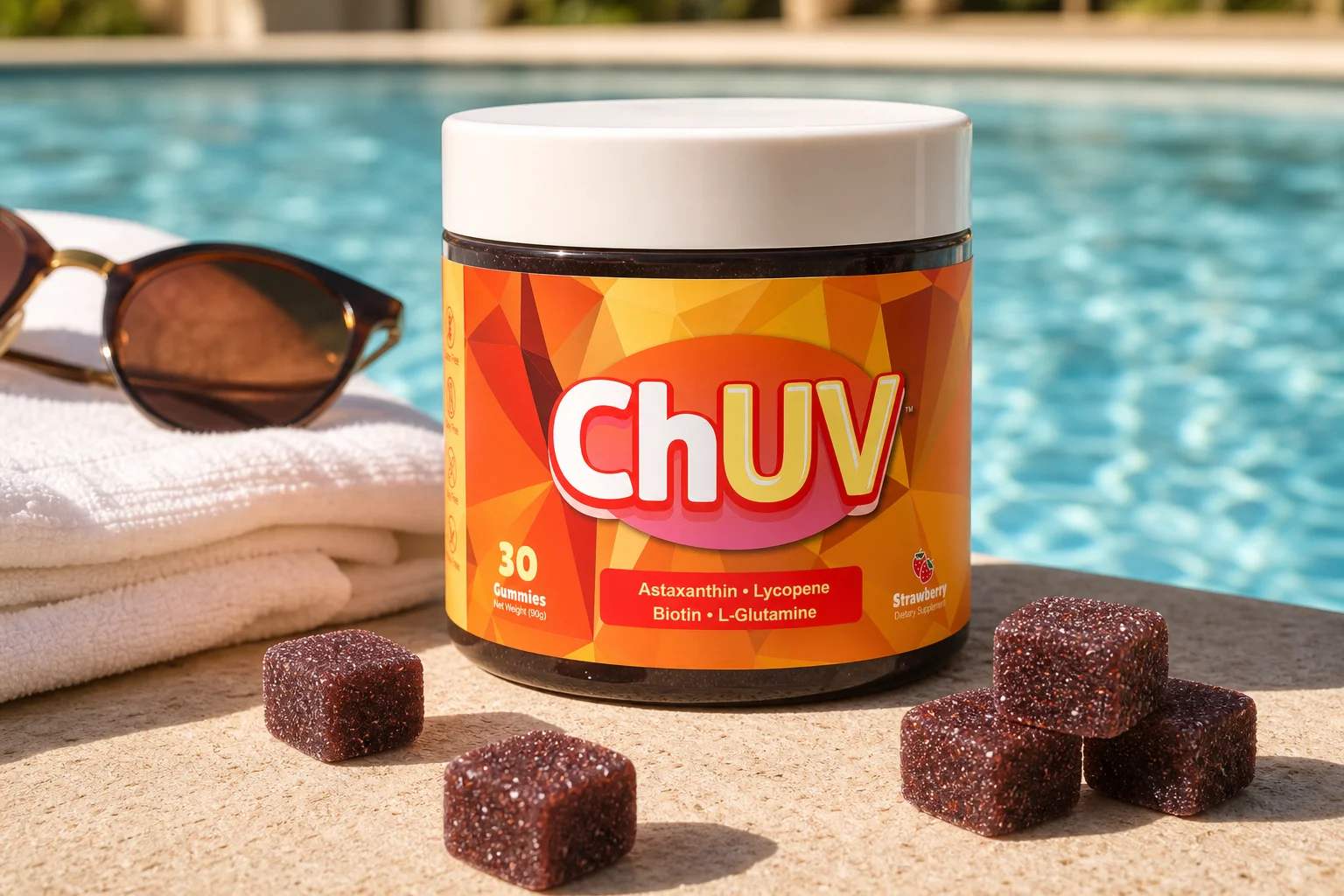
When comparing tanning gummies vs carotene pills, the carotenoid profile matters more than the supplement format. ChUV Tanning Gummies combine astaxanthin and lycopene, two clinically studied carotenoids that support a natural warm skin tone, while single-carotenoid beta carotene pills carry a documented history of unnatural yellowish-orange discoloration. Two carotenoids accomplish what one cannot.
By CAYO Nutra Team, Supplement Specialists
What Are Carotene Pills and Why Do People Take Them?
Carotene pills, often sold as tanning pills, have circulated in the supplement market for decades as an alternative to UV exposure. The primary active ingredient is beta carotene, a fat-soluble pigment responsible for the orange color of carrots and sweet potatoes. When consumed in significant quantities, beta carotene deposits in skin and subcutaneous fat, producing a visible color shift. The problem is the color it produces: at doses high enough to noticeably darken skin, beta carotene tends to generate a yellowish to orange cast rather than any believable version of a sun-induced tan. Dermatologists refer to this as carotenodermia, which concentrates most visibly on the palms, soles, and nasolabial folds, producing a tone that reads more as unnatural discoloration than a tan.
Beyond cosmetic concerns, beta carotene carries documented side effects at high doses. Research by Omenn et al. (New England Journal of Medicine, 1994) found that beta carotene supplementation in smokers was associated with a higher incidence of lung cancer compared to placebo groups. The Alpha-Tocopherol, Beta Carotene Cancer Prevention Study corroborated this finding. While the elevated risk is most pronounced in smokers, these results established that high-dose beta carotene is not universally safe, and they matter when evaluating tanning pills that rely on it as their only active ingredient.
The Science Behind Astaxanthin and Lycopene
ChUV's two-carotenoid approach begins with astaxanthin, a keto-carotenoid produced by the microalgae Haematococcus pluvialis. Unlike beta carotene, astaxanthin does not convert to vitamin A in the body, so it does not accumulate the same pro-oxidant burden at higher concentrations. Research by Tominaga et al. (Acta Biochimica Polonica, 2012) found that 6 mg of astaxanthin daily produced measurable improvements in skin elasticity, moisture content, and texture in female subjects over 8 weeks. Astaxanthin is also one of the most potent antioxidants studied in nutrition science, estimated to be roughly 6,000 times more effective than vitamin C at neutralizing singlet oxygen (Naguib, Y.M.A., Journal of Agricultural and Food Chemistry, 2000).
Lycopene, the carotenoid responsible for the deep red of tomatoes and watermelon, rounds out ChUV's formula by supporting the skin's baseline resilience and warmth. A study by Stahl et al. (Journal of Nutrition, 2001) demonstrated that supplemental lycopene reduced UV-induced erythema in human subjects, pointing to a genuine internal sun protection mechanism. Both carotenoids deposit in skin tissue through complementary pathways: astaxanthin scavenges free radicals generated by UV exposure while lycopene reduces oxidative stress at the cellular level. This two-pathway approach is what single-ingredient beta carotene pills cannot replicate. For a closer look at how tanning gummies enhance skin through these mechanisms, see our guide to How Tanning Gummies Enhance Your Skin Naturally.
Side Effects: Two Carotenoids vs One
The side effects comparison is where tanning gummies and carotene pills diverge most clearly from a safety standpoint. At doses required to visibly shift skin color, beta carotene produces carotenodermia as a near-guaranteed outcome. The resulting unnatural yellowish-orange discoloration reverses only after discontinuing supplementation and waiting for the pigment to clear from fat tissue, a process that can take weeks. For smokers and former smokers, the clinical risk profile is more concerning based on two large randomized controlled trials.
Astaxanthin's safety record at standard supplement doses is substantially cleaner. The European Food Safety Authority reviewed astaxanthin in 2020 and found no safety concerns at doses up to 8 mg per day. Lycopene at typical dietary supplement levels is similarly well-tolerated in the clinical literature. For anyone considering a daily supplement to support skin tanning over weeks and months, this safety differential carries meaningful weight.

Skin Tanning Results: Natural Warm Glow vs Orange Cast
The visible outcome of skin tanning is where tanning gummies vs carotene pills diverge most dramatically for real users. Beta carotene shifts skin toward yellow-orange territory in a way that is uneven and concentrates in areas with higher fat content. The result tends toward unnatural discoloration rather than a tan, and users who have tried both formats consistently report that carotene pills delivered an orange-yellow tone that looked nothing like UV-induced color.
Astaxanthin and lycopene support a different skin tone outcome. By accumulating in dermal layers and amplifying how skin responds to UV light and light therapy, including red light and infrared sauna sessions, these carotenoids help users achieve desired results that read as a genuine natural warm glow. Whether your routine includes outdoor sun tanning, a tanning salon, or sunless tanning methods like spray tanning, the carotenoid foundation ChUV builds helps you achieve desired goals that look believable and even. The tone develops gradually rather than as a concentrated pigment deposit in fat tissue. See our breakdown of Tanning Gummies Vs Traditional Tanning Health Insights for a full method-by-method comparison.
Sun Protection and Skin Health: An Underrated Advantage
One advantage that separates the two-carotenoid approach from carotene pills is the contribution to sun protection and skin health. Lycopene reduces UV-induced oxidative damage at the cellular level, as demonstrated in the Stahl et al. study. Astaxanthin concentrates in skin tissue, where it neutralizes oxidative stress generated during high UV index exposure more effectively than beta carotene, which can function as a pro-oxidant at the concentrations needed for visible tanning effects.
This means that every day you take ChUV, your skin receives antioxidant support whether or not you are actively seeking a tan. Whether your experience with tanning includes tanning salons, tanning beds, outdoor sessions, or UV light exposure, the internal carotenoid baseline you build with consistent daily use works continuously on skin health. Carotene pills at comparable doses do not provide this benefit. For those researching which products deliver across formats, our guide to Best Tanning Supplements 2026 Gummies Pills Capsules Compared covers the full landscape.
Choosing Between Tanning Gummies vs Carotene Pills for Your Skin Goals
The decision between tanning gummies vs carotene pills comes down to what outcome you want and what risks you accept. Beta carotene pills can shift skin color, but the shift produces unnatural yellowish-orange discoloration at effective doses and carries a risk profile that is not trivial at high concentrations. Tanning gummies built around astaxanthin and lycopene produce a warmer, more natural-looking outcome with a significantly cleaner safety record.
The supplement format is secondary to the ingredient quality. A tanning pill built on astaxanthin outperforms a tanning pill built on beta carotene. Tanning gummies with both astaxanthin and lycopene outperform either single-carotenoid product. The two-carotenoid strategy is the real differentiator. To see what 90 days of consistent use actually looks like, I Tried Tanning Gummies For 90 Days Month By Month Results documents a real user's month-by-month experience. For a thorough overview of everything these gummies can do, the Complete Guide To Tanning Gummies is the place to start. Have questions about whether ChUV fits your routine? Contact the team directly.
Frequently Asked Questions
Are tanning gummies safer than carotene pills?
For most users, yes. Tanning gummies formulated with astaxanthin and lycopene carry a meaningfully cleaner safety profile than high-dose beta carotene pills. At standard supplement doses, astaxanthin and lycopene show minimal adverse effects in clinical literature. High-dose beta carotene is associated with carotenodermia and, in smokers, an increased risk of lung cancer per two major randomized controlled trials. The two-carotenoid approach carries substantially fewer side effects for the vast majority of users.
Do tanning gummies actually change your skin color?
Yes. Astaxanthin and lycopene accumulate in skin tissue and contribute to a warmer, more golden skin tone over weeks of consistent use. The color shift is most visible when combined with sun exposure, indoor tanning, or UV light sessions. The result is a natural warm glow rather than the unnatural yellowish-orange tinting that beta carotene produces at comparable concentrations.
What is the difference between astaxanthin and beta carotene?
Both are carotenoids, but they function differently in the body. Beta carotene converts to vitamin A and deposits in fat tissue at high doses, producing a yellowish-orange skin tone. Astaxanthin does not convert to vitamin A and functions primarily as an antioxidant, scavenging free radicals generated by UV exposure. Astaxanthin is substantially more potent on an antioxidant basis than beta carotene, and its skin-level concentration does not produce the same unnatural discoloration.
How long before I see skin tanning results from tanning gummies?
Most users report a warmer skin tone beginning around weeks 4 to 6 of consistent daily use. Visible skin tanning results tend to build through weeks 8 to 12, especially when paired with sun exposure, UV light sessions, or indoor tanning. Carotenoid accumulation in skin tissue is gradual, so consistency matters more than dose.
Can I use tanning gummies alongside spray tanning or at a tanning salon?
Yes. ChUV is designed to complement your existing tanning routine. Pairing tanning gummies with spray tanning, tanning salons, tanning beds, or outdoor sessions helps build a deeper, more lasting baseline tone. The carotenoid support works alongside UV exposure and sunless tanning methods. Standard sun protection practices, including topical SPF, should still be applied during any UV exposure.
Start Your Two-Carotenoid Tan With ChUV
The science is clear: two carotenoids outperform one, and astaxanthin plus lycopene outperform beta carotene on every meaningful metric. Explore ChUV Tanning Gummies and see what a dual-carotenoid formula can do for your skin.


