
Astaxanthin vs CoQ10: Comparing Two Powerful Antioxidants
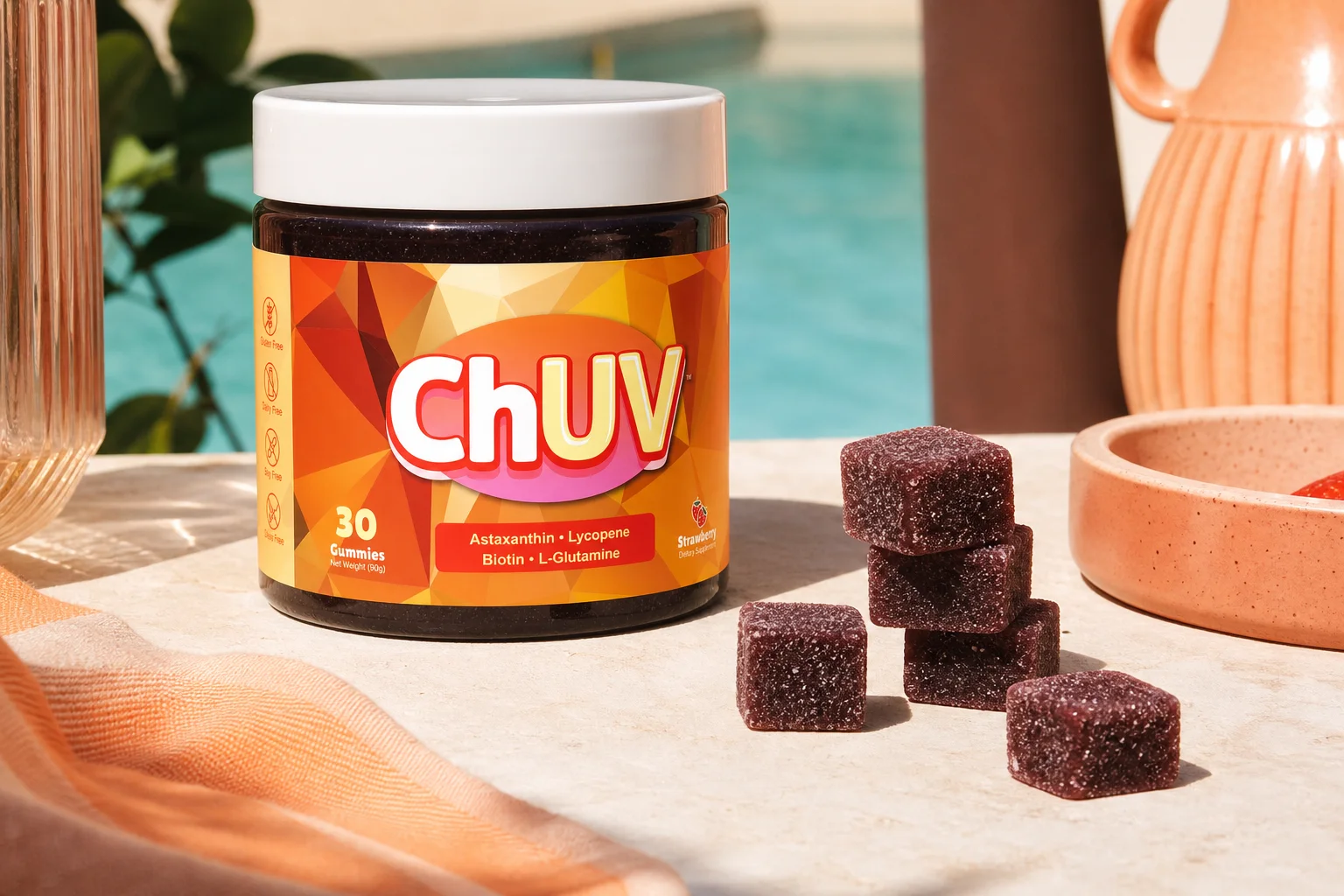
When comparing astaxanthin vs CoQ10, both are impressive antioxidants, but they serve distinct biological roles. Astaxanthin, drawn from haematococcus pluvialis algae, is a carotenoid that protects skin, eyes, and cell membranes across multiple environments, while CoQ10 specializes in cellular energy production. ChUV Tanning Gummies harnesses astaxanthin's unique properties for a natural, sun-kissed glow.
By CAYO Nutra Team, Supplement Specialists
What Is Astaxanthin?
Astaxanthin is a red-orange carotenoid pigment produced by the microalgae haematococcus pluvialis. Under stress conditions such as intense UV radiation or nutrient scarcity, the algae synthesizes astaxanthin as a survival mechanism, flooding its cells with one of the most potent antioxidants found in nature. That same protective chemistry transfers to the humans who supplement with it.
What distinguishes astaxanthin from most antioxidants is its ability to span the full width of cell membranes. It anchors on both the water-soluble interior and the fat-soluble exterior simultaneously, allowing it to neutralize free radicals in both environments at once. Most antioxidants work in one or the other, not both. Yamashita (2006, Carotenoid Science) found measurable improvements in skin moisture and elasticity after eight weeks of oral astaxanthin in a controlled human trial.
Because it is a pigment, astaxanthin also produces visible changes in skin tone with consistent daily use. It imparts a natural warm glow that reflects its carotenoid chemistry. This is very different from the unnatural yellowish-orange discoloration associated with beta carotene, which is not an ingredient in ChUV.
What Is CoQ10?
Coenzyme Q10, commonly known as CoQ10, is a fat-soluble compound present in every human cell. Unlike astaxanthin, it is not a pigment and produces no change in skin color. Its defining role is in energy production: CoQ10 sits within the mitochondrial membrane and ferries electrons through the electron transport chain, enabling cells to generate adenosine triphosphate (ATP). Every heartbeat, muscle contraction, and cognitive process depends on this cycle.
CoQ10 is also a powerful antioxidant within its domain. It neutralizes the free radicals generated as byproducts of ATP synthesis, protecting cell membranes inside the mitochondria from oxidative damage. High-demand tissues such as the heart, liver, and skeletal muscle rely heavily on CoQ10 for both energy and antioxidant support.
The body's endogenous CoQ10 synthesis declines with age, typically beginning around the fourth decade of life. Rosenfeldt et al. (2007, Journal of Cardiac Surgery) reviewed CoQ10 supplementation in the context of heart health and found evidence for its role in reducing oxidative stress in cardiac tissue and supporting outcomes in patients with heart failure.
Astaxanthin vs CoQ10: Antioxidant Strength and Reach
The astaxanthin vs CoQ10 comparison is most striking when examining antioxidant capacity and biological range. Nishida et al. (2007, Carotenoid Science) estimated astaxanthin's singlet oxygen quenching power at approximately 6,000 times that of vitamin C and 550 times that of vitamin E. No common dietary antioxidant matches this figure on a per-molecule basis.
CoQ10 is a genuinely effective antioxidant, but its reach is more focused. It operates primarily within the mitochondria, protecting the machinery of energy production from oxidative stress. Astaxanthin, by contrast, crosses barriers that CoQ10 cannot, including the blood-brain barrier and the blood-retinal barrier, extending antioxidant protection to neural tissue and the retina.
Both work against oxidative stress, but they do so in different biological zones. Their effects are additive rather than overlapping, which is why researchers and formulators often regard them as complementary rather than competitive.

Skin and Tanning: Where Astaxanthin Leads
For consumers focused on skin tone and tanning, the astaxanthin vs CoQ10 comparison favors astaxanthin clearly. CoQ10 is a popular topical ingredient in skincare for its ability to reduce surface oxidative stress and support collagen stability. Oral CoQ10 contributes to skin health from within, but it delivers no pigmentation and no visible shift in skin tone.
Astaxanthin goes further because it is a carotenoid pigment. It accumulates in skin tissue and gradually shifts the complexion toward a warmer, more golden hue. This natural warm glow mirrors the result of careful, healthy sun exposure. Lorenz (2007, Agro Food Industry Hi-Tech) documented the role of oral carotenoids in supporting skin photoprotection alongside cosmetic changes in tone.
This combination of pigmentation and UV-protective antioxidant activity is the foundation of the ChUV formula. Astaxanthin and lycopene together support the body's natural tanning response while cushioning skin cells against UV-induced oxidative stress. CoQ10 is well suited to what it does, but tanning support is not in its repertoire.
Heart Health, Eye Health, and Energy Production
These two antioxidants each bring meaningful benefits to broader wellness goals, and their strengths align with very different priorities.
Heart Health
CoQ10's role in heart health is among the most studied areas in supplement science. Cardiac cells maintain among the highest mitochondrial density in the body, making them heavily dependent on CoQ10 for sustained energy production and antioxidant defense. Mortensen et al. (2014, JACC: Heart Failure) found that CoQ10 supplementation significantly reduced cardiovascular mortality in patients with severe heart failure over a two-year randomized trial.
Astaxanthin also contributes to heart health through different mechanisms. Yoshida et al. (2010, Atherosclerosis) found that 12 weeks of astaxanthin supplementation reduced triglyceride levels and raised HDL cholesterol in human subjects, two markers associated with reduced cardiovascular risk.
Eye Health
Astaxanthin has a particularly strong record for eye health because it crosses the blood-retinal barrier, something most antioxidants including CoQ10 cannot do. Retinal cells are among the most metabolically active in the body and generate significant free radical load during normal function. Nakamura et al. (2004, Journal of Clinical Therapeutics and Medicines) documented reductions in eye fatigue and improvements in visual function in subjects taking oral astaxanthin daily.
CoQ10 supports retinal cell mitochondria through its energy production role, but its impact on eye health is indirect and lacks astaxanthin's ability to cross the retinal barrier.
Energy Production
For energy production, CoQ10 holds the clear advantage. It is a direct participant in the mitochondrial electron transport chain and sits at the center of ATP synthesis efficiency. In people with depleted CoQ10 levels, particularly older adults or those taking statin medications which reduce CoQ10 synthesis, supplementation can improve perceived stamina and reduce fatigue.
Astaxanthin supports energy indirectly: by reducing the oxidative stress that degrades mitochondrial performance over time, it helps preserve the cellular environment in which CoQ10 operates. The two work well together from this angle.
Frequently Asked Questions
Can I take astaxanthin and CoQ10 together?
Yes. They target different biological systems and their benefits are additive rather than redundant. CoQ10 works inside the mitochondria, supporting energy production and protecting cell membranes at the mitochondrial level, while astaxanthin spans the full width of cell membranes and crosses barriers CoQ10 cannot. No known adverse interactions exist between the two compounds.
Which antioxidant is better for skin?
Astaxanthin. As a red-orange carotenoid from haematococcus pluvialis, it accumulates in skin tissue and produces a natural warm glow alongside measurable improvements in moisture and elasticity. CoQ10 supports general skin cell health but provides no pigmentation and does not influence skin tone the way astaxanthin does.
Why does ChUV use astaxanthin and not CoQ10?
ChUV is formulated for tanning support, which requires a carotenoid that pigments the skin and protects against UV-related oxidative stress. Astaxanthin from haematococcus pluvialis provides both. CoQ10 is not a carotenoid, does not produce skin pigmentation, and is better suited to energy and cardiac support formulas.
Does astaxanthin actually change skin color?
Yes. Consistent daily use shifts skin tone toward a warmer, more golden hue through astaxanthin's carotenoid pigment. This is a natural skin color change and is distinct from the unnatural yellowish-orange discoloration caused by beta carotene, which is not an ingredient in ChUV.
How long does it take to see results from astaxanthin?
Yamashita's 2006 study in Carotenoid Science reported visible improvements in skin moisture, elasticity, and warmth of tone after six to eight weeks of consistent daily supplementation at doses between four and twelve milligrams per day. Tanning effects develop gradually alongside consistent sun exposure.
Discover Astaxanthin-Powered Tanning Support
If your priority is skin tone enhancement, natural color, UV resilience, and broad antioxidant protection, astaxanthin is the stronger choice between these two compounds. CoQ10 excels at energy and cardiovascular support, while astaxanthin covers both cellular defense and the cosmetic benefits that CoQ10 simply cannot deliver. To learn more about how ChUV fits your routine, reach out through our Contact page.


