
Tanning Gummies for Olive Skin Tones: Building Depth Without Going Orange
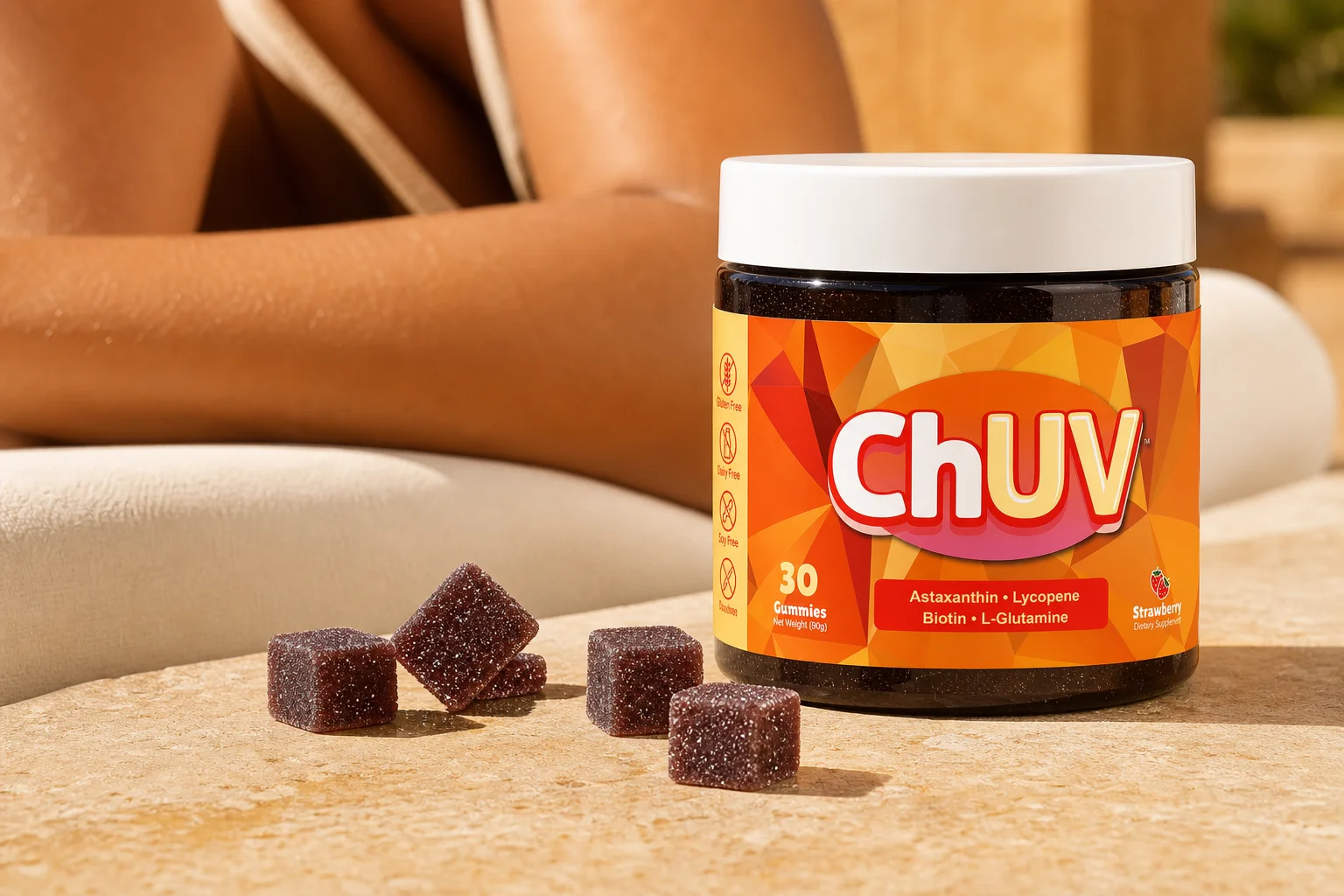
Tanning gummies for olive skin tones work best when they support the skin's existing warm undertones rather than fight them. ChUV Tanning Gummies combine astaxanthin and lycopene to help olive complexions build a deeper, sun-kissed color across months of consistent use, without the unnatural yellowish-orange tinting that cheaper carotenoid formulas can cause.
By CAYO Nutra Team, Supplement Specialists
What Makes Tanning Gummies for Olive Skin Tones Different
Olive skin sits between Type III and Type IV on the Fitzpatrick scale. Its baseline melanin content is higher than fair skin, which means it responds quickly to UV exposure, absorbs color from red light therapy and infrared treatments more readily, and holds tan results for longer periods. That natural advantage is worth protecting.
The issue most olive-skinned people experience with tanning supplements is not that the supplements fail to provide color. The issue is that the color they provide looks off. Skin that should look sun-kissed instead looks stained, flat, or orange. That is the experience associated with beta carotene, the carotenoid found in most budget tanning gummies and tan accelerators on the market today.
Olive skin's existing yellow-green undertones amplify the orange shift that beta carotene produces. When beta carotene deposits in skin tissue at inconsistent rates, as it tends to do based on individual gut enzyme activity, the result is an uneven, unnatural discoloration that is particularly obvious on olive complexions. Choosing tanning gummies that avoid beta carotene entirely is the most important decision olive-skinned people can make when shopping for a supplement.
The Science Behind Beta Carotene and Olive Skin
Beta carotene is a provitamin A carotenoid. The body converts it into retinol, but only up to a point. When intake exceeds what the body can convert and use, excess beta carotene deposits in subcutaneous fat and skin. Researchers including Muñoz-Muñoz et al., publishing in the Journal of Investigative Dermatology (2019), documented that carotenoid skin deposition concentrates in areas with higher fat tissue and is visible as yellowish discoloration, a condition called carotenodermia.
For olive skin, this matters because carotenodermia's yellow signal lands on top of an existing warm, golden base. The result is not a natural warm glow. It is unnatural yellowish-orange tinting that no spray tanning session, tanning spa treatment, or light therapy protocol can fully correct while the beta carotene accumulation continues.
People who love tanning spa services in cities like Los Angeles and elsewhere often report that staff at spray tanning booths and tanning beds notice the difference immediately. Clients with carotenodermia take DHA spray color unevenly, and UV activation from tanning beds can make the orange tinting appear more saturated rather than darker. Beds booths that use UV technology are particularly unforgiving of an uneven carotenoid base.
This is why the best approach to tanning gummies for olive skin tones starts with the ingredient list. If beta carotene appears, it is worth looking for a better option.
How Astaxanthin and Lycopene Serve Olive Skin
Astaxanthin and lycopene are the two carotenoids in ChUV. Neither behaves like beta carotene, and both have distinct properties that make them well-suited for olive complexions.
Astaxanthin is derived from marine algae and carries a pink-to-red pigment signature. Tominaga et al., in Acta Biochimica Polonica (2012), found that eight weeks of astaxanthin supplementation improved skin elasticity, texture, and self-reported skin tone among adult women. The warm-rosy pigment that astaxanthin contributes reads as healthy warmth rather than the flat yellow that beta carotene creates. For olive skin, that distinction becomes visible across months of consistent use as the skin deepens toward a richer, more saturated version of its natural color.
Lycopene is the red carotenoid found in tomatoes and watermelon. Aust et al., publishing in the Journal of Investigative Dermatology (2005), confirmed that dietary lycopene reduces UV-induced erythema, providing the skin with a photoprotective benefit while also contributing a warm-red color deposit in skin tissue. For olive skin bodies, lycopene's red contribution blends with the existing yellow-green base to produce amber and bronze tones rather than orange tones. That is exactly the depth olive-skinned people are trying to build.
Together, astaxanthin and lycopene provide a color that feels like an extension of what olive skin already does in summer.

Pairing Tanning Gummies with Sun, Spray, and Light Therapy
ChUV works well as a standalone supplement, but pairing it with other color-building methods amplifies results for olive skin.
Sun Exposure
Natural UV light triggers melanin synthesis, which builds on top of the carotenoid color layer that astaxanthin and lycopene provide in skin tissue. Olive skin users who take ChUV consistently across summer months and maintain moderate sun exposure often love the way the two effects compound. The carotenoid base makes the resulting tan appear richer and more even from the start. Apply SPF daily to protect the skin barrier and keep the color looking clean.
Spray Tanning
A spray tanning session applies dihydroxyacetone (DHA) to the skin surface, producing a sunless color reaction within hours. When olive skin already carries a warm, even carotenoid base from ChUV, the DHA spray takes more evenly and the finished color looks more natural. Staff at spray tanning booths and sunless tanning spa services consistently note that clients with a real dietary color foundation handle spray tanning better than clients who arrive with no base at all. The color reads dimensional rather than painted on.
Red Light Therapy and Infrared
Red light therapy and infrared light do not directly tan skin, but they support skin cell turnover, collagen health, and tone evenness, all of which improve the quality of color that shows up on the surface. Many tanning spa services provide red light therapy alongside tanning beds and spray booths. For olive skin, where tone evenness is a priority, adding light therapy rounds out the picture. Infrared and red light therapy are now standard services at most full-service tanning spa locations, and both pair well with a ChUV routine.
Sunless Methods
For olive skin that wants to stay free from UV exposure entirely, sunless methods like DHA lotion and spray tanning still benefit from a carotenoid foundation. ChUV provides the warm-depth layer that makes sunless color look like a real tan rather than a surface coat. The body color reads more dimensional when there is a real carotenoid presence underneath, and the health benefits of astaxanthin extend to photoprotection that supports skin integrity even without UV input.
How Long Before Olive Skin Sees Results
Most olive-skinned users who take ChUV consistently begin to notice color deepening within 4 to 6 weeks. Full results build over 2 to 3 months as astaxanthin and lycopene reach a steady-state concentration in skin tissue. The change tends to be gradual and natural-looking rather than sudden, which is one of the reasons people who love this approach prefer it to spray-only or UV-only methods.
Maintaining ChUV use through the summer season keeps the color building and prevents it from fading between sun exposure or tanning spa visits. Olive skin that has a consistent carotenoid base holds color better across seasonal transitions, and the health benefits of astaxanthin and lycopene extend beyond color to skin elasticity and long-term photoprotection.
Frequently Asked Questions
Will tanning gummies make olive skin look orange?
ChUV tanning gummies use astaxanthin and lycopene rather than beta carotene. Beta carotene is the carotenoid most associated with unnatural yellowish-orange tinting in olive skin. Astaxanthin and lycopene contribute warm-rosy and warm-red tones that complement olive undertones, producing a natural warm glow. Used consistently over months, ChUV deepens olive skin's existing color without pushing it toward unnatural discoloration.
Can I use tanning gummies with spray tanning services?
Yes. ChUV and spray tanning for olive skin tones work well together. ChUV builds a warm carotenoid base over time while spray tanning adds immediate surface color. Olive skin with a consistent ChUV foundation tends to take DHA spray more evenly. Many tanning spa services recommend combining oral carotenoid supplements with spray sessions for the most natural-looking and lasting results.
Do tanning gummies work alongside tanning beds for olive skin?
Yes, and olive skin tends to respond especially well. Tanning beds stimulate melanin production, which compounds on top of the warm carotenoid layer from astaxanthin and lycopene. Users with a strong ChUV base often find they tan more evenly in beds and booths and retain color longer between sessions than they did before starting supplementation.
Is red light therapy compatible with ChUV tanning gummies?
Red light therapy does not interfere with ChUV. Red light and infrared therapy improve skin health, tone evenness, and cell turnover, which helps the color from astaxanthin and lycopene appear more uniformly across the body. Many tanning spa services now offer red light therapy as a standard add-on to their tanning spa services, and the combination works especially well for olive skin.
How are tanning gummies for olive skin tones different from general tanning supplements?
Most general tanning supplements use beta carotene as their primary carotenoid, which is associated with unnatural yellowish-orange tinting on olive skin. ChUV uses astaxanthin and lycopene, which are better matched to how olive complexions process carotenoid pigment. The result is a natural warm glow that builds depth without orange tones, making ChUV a more targeted option for olive skin tones.
Build the Depth Your Olive Skin Is Ready For
Olive skin has everything it needs to develop a rich, lasting, sun-kissed color. ChUV's astaxanthin and lycopene formula is designed to work with that biology across months of consistent use. For personalized guidance on your ChUV routine, Contact the CAYO Nutra team directly.


